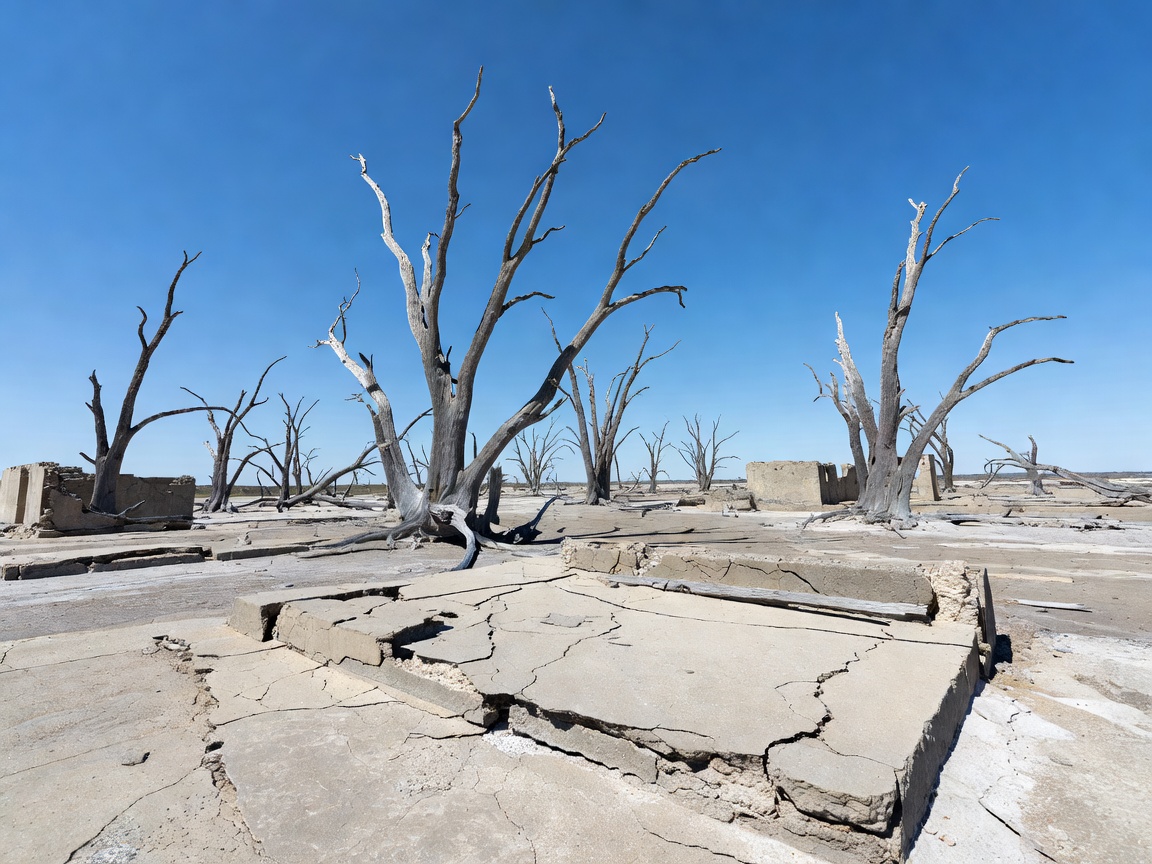
1. The Miracle Waters of Lake Epecuén
Founded in the 1920s along the shores of Lago Epecuén in the Buenos Aires Province, Villa Epecuén grew into a bustling thermal resort accommodating 25,000 tourists each season. The lake's salinity levels rivaled the Dead Sea, containing ten times more salt and minerals than standard ocean water.
Hotels, spas, and lakeside pavilions flourished until an unprecedented rainfall cycle in November 1985 caused water levels to breach the protective earthen seawall. By 1993, the entire town lay buried under 10 meters of brine.
"When the lake water finally retreated in 2009 due to climate shifts, it revealed not mud, but a fossilized landscape entirely coated in white sodium sulphate crystals."
2. Petrochemical Mineralization Effect
The hypersaline chemistry of Lago Epecuén acted as a preserving and petrifying agent. Thousands of eucalyptus trees lining the avenues died instantly from salt poisoning, yet their wood was impregnated with mineral salts, preventing insect decomposition. Today, they stand like silver bones sticking out of the cracked earth.
Brick structures lost their outer mortar, leaving pure skeletal lattices of fired terracotta brick held together only by crystallized mineral deposits.