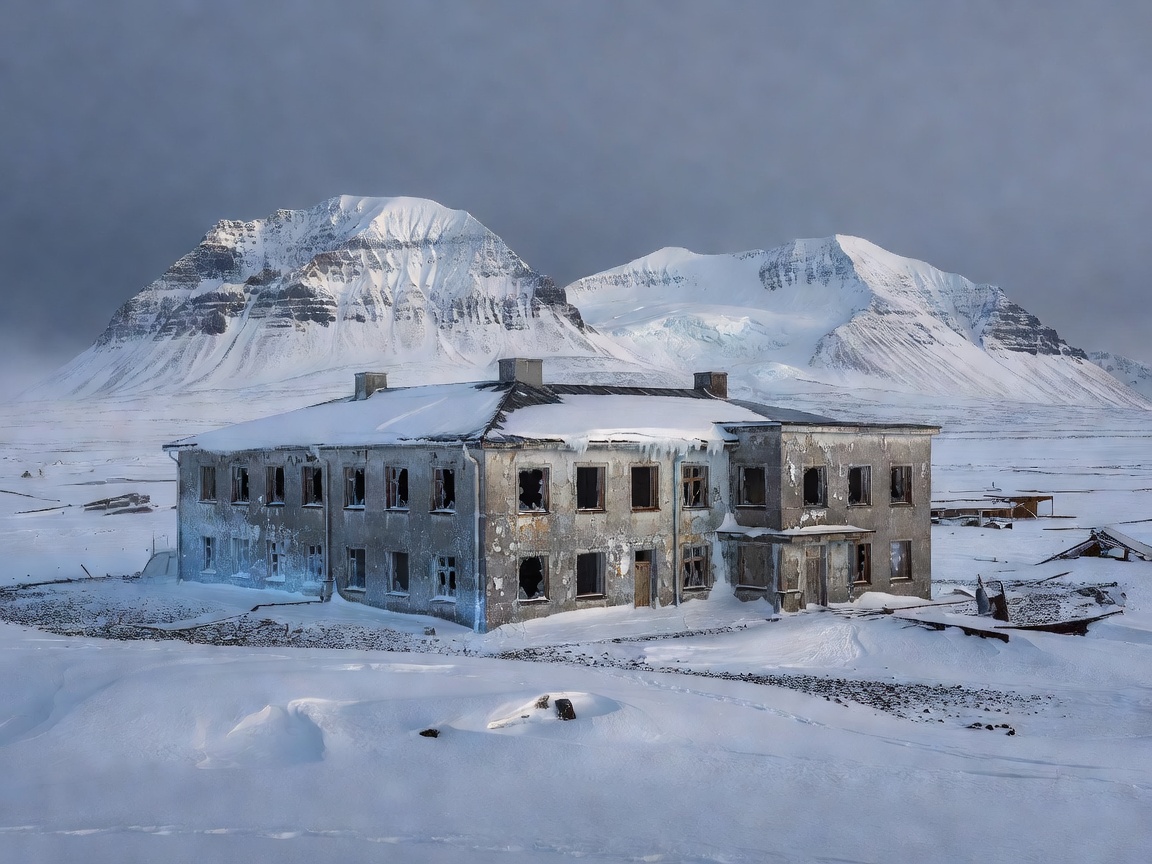
1. The Arctic Model City
Founded by Sweden in 1910 and sold to the Soviet state-owned Trust Arktikugol in 1927, Pyramiden was developed as a flagship utopian community in the High Arctic. Situated on the shores of Billefjorden, the town housed more than 1,000 coal miners, engineers, musicians, and their families.
To demonstrate the excellence of the Soviet system, Arktikugol spared no expense: tons of rich Ukrainian topsoil were shipped by cargo vessel to create the northernmost lawn on Earth, and a state-of-the-art Cultural Palace was erected with a heated indoor Olympic-sized swimming pool, basketball arena, film cinema, and an imported Red October grand piano.
"In Pyramiden, the extreme low humidity and constant sub-zero temperatures halt bacterial breakdown, preserving wooden desks, books, and film reels as if abandoned yesterday."
2. Abrupt 1998 Abandonment
Following the 1996 tragic crash of Vnukovo Airlines Flight 2801 on Operafjellet—which claimed 141 lives of Arktikugol workers and their dependents—along with diminishing coal seams, the decision was made to mothball the settlement. In October 1998, the last scheduled cargo ship departed for Murmansk.
Unlike tropical ruins that decay via moss and moisture, Pyramiden remains in suspended animation. In the music conservatory, sheet music sits on stands; in the canteen, salt shakers and porcelain teacups remain neatly aligned in cupboards.
3. Wildlife Domain
With humans gone, Pyramiden has become a sanctuary for Arctic wildlife. Glaucous gulls nest along the window sills of the abandoned residential blocks, Arctic foxes raise litters beneath wooden boardwalks, and polar bears frequently roam the main thoroughfare, now unofficially named "Lenin Boulevard."