1. A Millennium of Hilltop Fortification
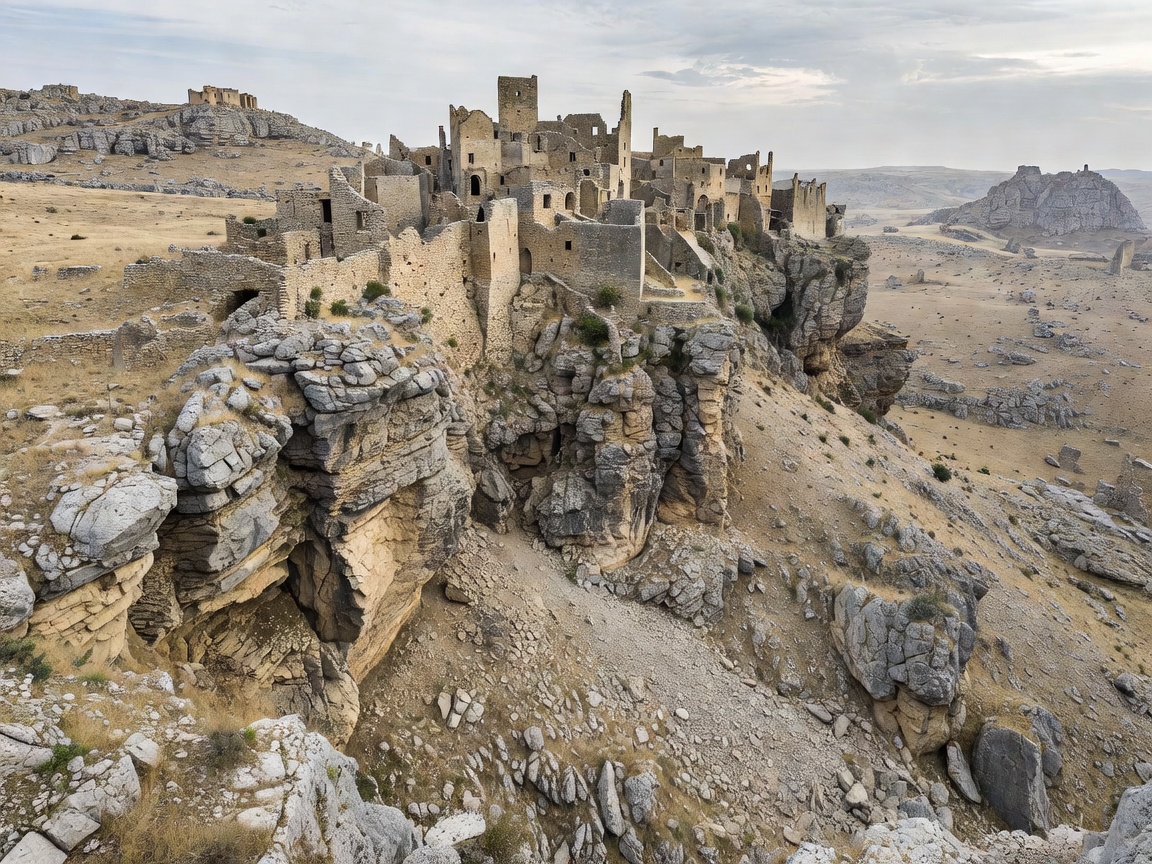
Founded around 540 AD by Greeks fleeing coastal malaria, Craco was fortified in the 13th century under Norman rule with a prominent quadrangular watchtower that still crowns the summit. Built along the crest of a 400-meter ridge over the Cavone river valley, the town offered unassailable military positioning.
By the 19th century, over 2,000 citizens inhabited the tiered limestone houses, cultivating olive groves and grain. However, the hill beneath Craco consists of soft, water-sensitive clay beds (known as argille azzurre) interspersed with sand layers.
"Civil works in the 1950s designed to improve sewer drainage inadvertently saturated the fragile clay sublayers, triggering an unstoppable subterranean slip."
2. The Landslides of 1963 and the 1980 Earthquake
In 1963, major fissures opened along the western cliffs, splitting stone houses in half. The Italian government ordered a phased evacuation of the most threatened neighborhoods to Craco Peschiera in the valley floor. In 1972, a major flood accelerated hillside shearing, and on November 23, 1980, the Irpinia earthquake rendered every remaining masonry structure irrevocably unsafe.
By December 1980, Craco was declared permanently uninhabitable. The red-tiled roofs, baroque frescoes of San Nicola Church, and iron balconies were left behind as silent testaments to structural failure.
3. Current Conservation & Cinematic Legacy
Because of its untouched medieval silhouette, Craco has served as the filming location for multiple historical and apocalyptic cinematic works, including Mel Gibson's The Passion of the Christ and Marc Forster's Quantum of Solace. Today, specialized seismic monitoring sensors track minute movements in the cliffs while structural stabilization scaffolds preserve the Norman tower.