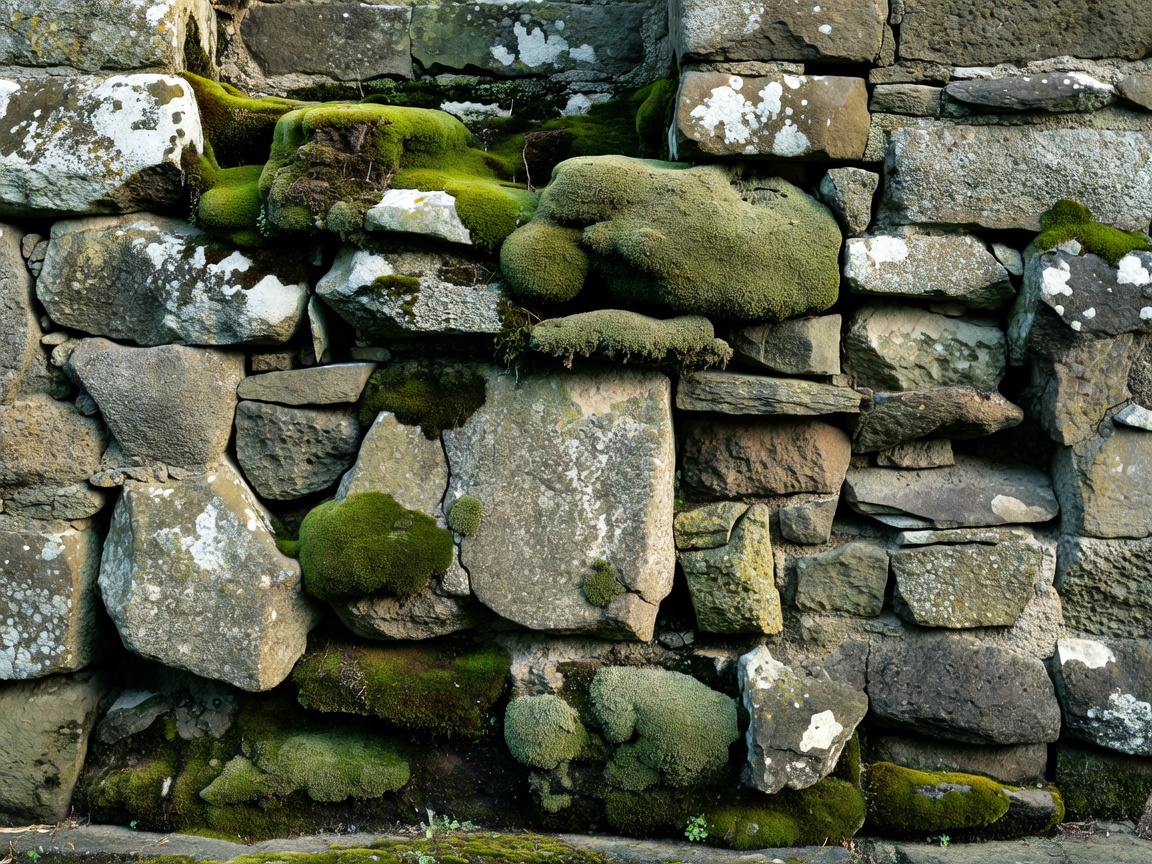
1. The Primary Colonizers: Biofilms and Bryophytes
The moment human maintenance, chemical cleaning, and vehicular abrasion cease, the inanimate surfaces of our cities become ecological footholds. Within months, airborne spores of cyanobacteria, algae, and crustose lichens (such as Caloplaca and Xanthoria elegans) adhere to damp north-facing masonry, concrete cornices, and roof shingles.
These microbial biofilms secrete oxalic and carbonic acids that slowly etch the silicate and carbonate matrix of building stone. This microscopic pitting traps organic detritus, windblown pollen, and mineral dust, creating the proto-soil layer necessary for secondary colonizers: bryophytes (mosses) and liverworts.
"In temperate and humid climates, moss mats create spongy hygroscopic reservoirs on concrete roofs, holding twenty times their dry weight in water and accelerating structural rot."
2. Biomechanical Cleavage: The Power of Pioneer Roots
As humus accumulates in expansion joints and gutter troughs, pioneer woody species establish themselves. In temperate Eurasian zones (such as Pripyat), seeds of silver birch (Betula pendula) and aspen (Populus tremula) dominate within five years. In Mediterranean enclaves (like Craco), wild fig (Ficus carica) and caper bushes (Capparis spinosa) exploit limestone clefts.
The radial growth pressure of expanding tree roots can exceed 1.5 to 2.0 megapascals (MPa)—sufficient to shear reinforced concrete slabs, dislodge stone masonry blocks, and topple load-bearing retaining parapets.
3. The Faunal Recolonization Curve
The return of animal life to deserted human settlements does not follow standard woodland succession; instead, architecture provides unique structural analogues to natural cliff faces, caves, and canyons:
- Avian & Chiropteran Phase (Years 1–5): Swallows, glaucous gulls (in Arctic Pyramiden), barn owls, and bat colonies occupy attics, stairwells, and broken elevator shafts. Nitrogen-rich guano rapidly enriches internal floor soils.
- Mesopredator & Herbivore Phase (Years 5–15): Rodents, foxes, raccoons, roe deer, and wild boar establish foraging trails along former city avenues, utilizing ground-floor apartments as winter dens.
- Apex Predator & Megaherbivore Resurgence (Years 15+): In expansive exclusion zones like Polissya around Pripyat, grey wolves (Canis lupus), Eurasian lynx, brown bears, and reintroduced herds of Przewalski horses regain apex trophic control, showing densities that exceed those in actively managed national parks.
4. Soil Formation and Anthropic Erasure
Over fifty to one hundred years, the cumulative deposition of leaf litter, broken masonry aggregates, and biological decay builds a rich topsoil layer known as an anthrosol-reductive horizon. Thoroughfares of tarmac and concrete are buried under 10–30 cm of dark loam, effectively converting urban landscapes back into self-sustaining biomes.